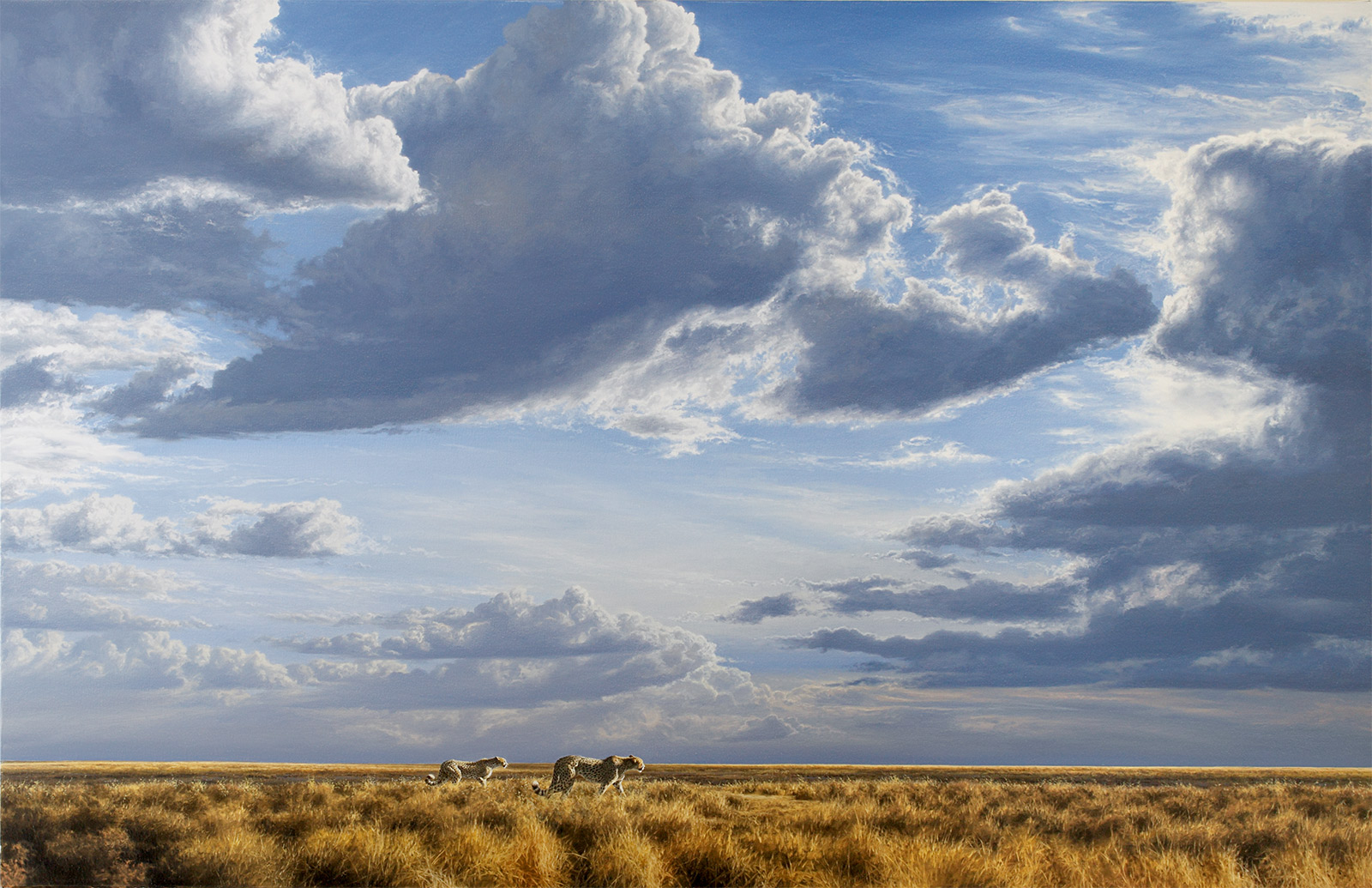
ARTIST: Paul Augustinus
TITLE: Sea of Grass
SIZE: 117cm x 181cm
Oil on Canvas

'Clouds, grass and horizons – these are the elements that combine to make up
nature’s grandest and most dramatic stage – the African plain. It is truly lonely out on treeless, grassy plains that stretch from horizon to horizon. It
even lonelier when you are crossing such plains in an ancient Toyota Land Cruiser
and anxiously listening for the sound of an engine spluttering. Being out in the middle of one of these plains is exactly like
being adrift on an ocean and just as dangerous should you get into trouble. So
when you cross such places you become mesmerized with the horizon and the
way the parallel ruts of the track you are following coalesce into a single thread
and then vanish at the horizon. Plains are vast stages where you
feel very small. There is no place to hide and nowhere to escape from the sun.
Surprisingly, grass covered plains that continue beyond the horizon are not that
common, but here are some of the thoughts I always have when I am out on a plain.
One: A predator can see every moving object within a radius of ten kilometres. So how does anything young survive in these places?
Two: When driving across a flat plain why does it always feel that one is on a slightly uphill track?
This uncanny sensation is hard to shake off even though you can see
that the terrain is completely flat.
Three: If you stand on a plain and listen carefully
you do not hear silence. Instead there is an unmistakable hum as you brain cranks the gain volume upwards. True silence is completely deafening!
If you are out on a plain when a
thunderstorm brews up get ready for an
assault on one’s senses with ear-splitting claps of thunder followed by magenta-tinged lightning bolts that prickle the hairs on one’s skin. Is one
supposed to exit one’s metal-clad vehicle and lie flat on the ground ?
This painting of cheetah on a plain below the Oloololo escarpment in the Mara Triangle in Kenya is my homage to all those thoughts and questions!'
.