*THE REFUGIA SERIES
ARTIST: Paul Augustinus
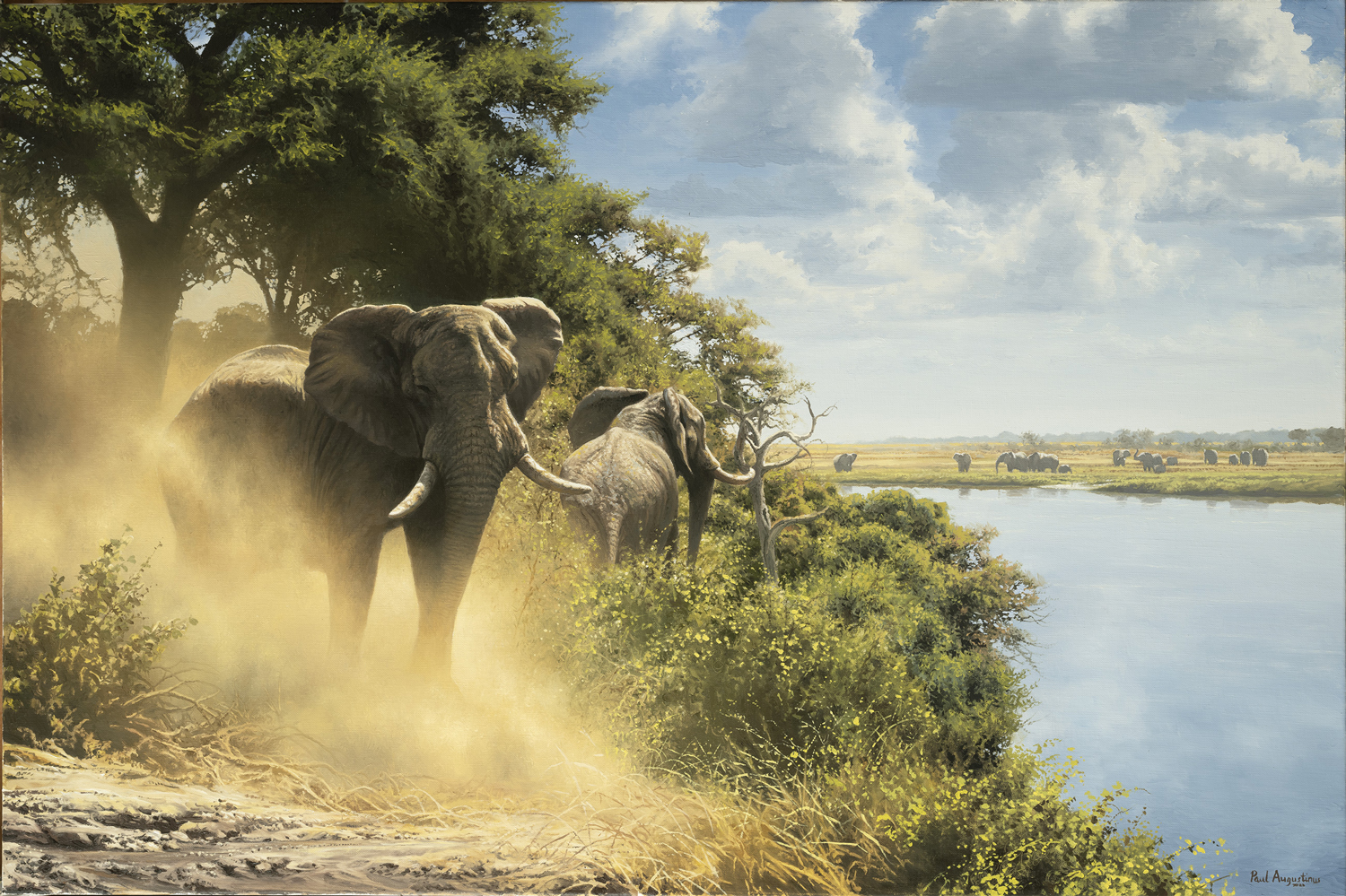
TITLE: REFUGIA SERIES: Opposite Sedudu Island , Chobe River, 1968
SIZE: 61cm x 91 cm
Oil on Canvas
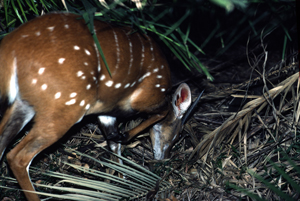
The Chobe river in northern Botswana is one of Africa's iconic wildlife areas. I believe that this part of Botswana will become one of the most important refugia areas in Africa. Tens of thousands of elephant come down to the river, in October, at the height of the dry season when all the pans in the Ngwezumba hinterland have dried up. This was not always the case. In the sixties elephants were common but only present in small numbers ans the area was only proclaimed a National Park in 1968. I visited the Chobe river several times on school holidays in the sixties. The Serondella sawmill was still active but by 1968 the sawmill and its associated village were being dismantled and removed. The stretch of river west of Kasane was an interesting place to walk looking for interesting birds. Elephants rarely seen because on this stretch of the Chobe as the riverbank was uncomfortably steep for elephants to negotiate, but bushbuck were present in the dense riverine forest and palm scrub in amazing numbers. It seemed as though every bush hid a bushbuck ready to bolt away. I saw lots of bushbuck and encountered very few elephants. One morning, however, I was surprised to come across these two elephants, and they were surprised to see me. This painting is of that moment, opposite Sedudu Island, in an era when wilderness realy was wild - when there were few rules and regulations and a lot more freedom to actually experience the wilderness. A great moment!
*THE REFUGIA SERIES:
We live in an era where every square kilometer of remaining wildlife habitat is now under threat. This new series of paintings is my homage to those special areas of Africa which, according to my own extensive experience, are going to be crucial for the survival of species and biodiversity. By definition 'Refugia' describes island-like tracts of land where circumstances have allowed species to survive after extinction in surrounding areas. Twenty thousand years ago, at the height of the last glaciation, the Congo basin was mostly dry savanna and the Namib desert dunes extended right up past the mouth of the Congo River. During that epoch two small rain forest 'refugia' patches remained. When the last glaciation ended twelve thousand years ago these two refugia expanded outwards to become the vast equatorial rain forest belt of today, stretching from West Africa to the Rwenzori Mountains in East Africa.
Present day refugia will be useful in the distant future when humankind has begun to reverse the environmental catastrophe we are now experiencing.
.