REFUGIA SERIES*
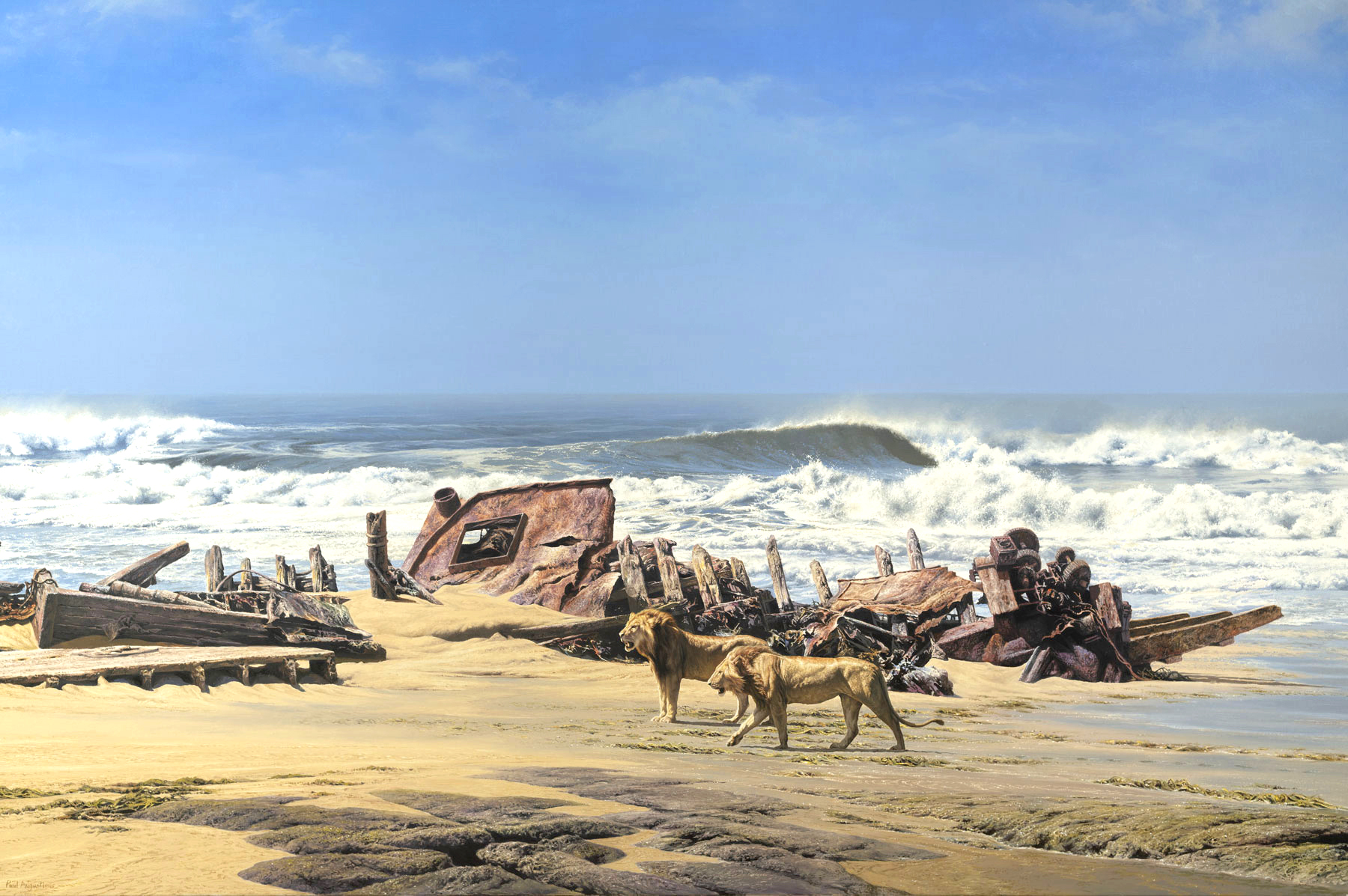
ARTIST: Paul Augustinus
TITLE: Survivors of the Skeleton Coast
SIZE: 117 cm x 180 cm
Oil on Canvas
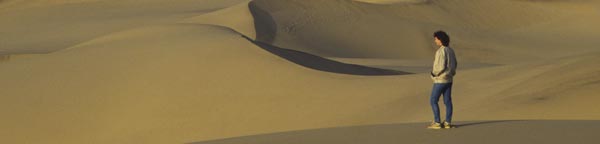
For me, one of the most interesting and mysterious aspects of African, are wilderness tracts bounded by a sea or ocean, where mega-fauna roam the beach! I have looked hard for these interesting locations. The area North of Lamu all the way to the Somali border is one of those areas. Lion, buffalo and cheetah are ocasionally seen on the sand and my father's business partner in the 1960s Bill Travis, wrote of a sighting of a lion pride on the beach he had seen from his fishing dhow. While camping via a chartered dhow on the northern coast of Kenya in 2004 we heard lions roaring one night near Kiunga on the Somalia border. During the rainy season in Gabon elephant, gorilla and leopard come out from the Loango rainforests on to the beach and my wife and I spent several months there observing this behaviors from a camp we built on the remote Lourie Lagoon - the source location of many of my coastal wildlife landscape paintings. In 1989 we had a once in a lifetime opportunity to travel to the mouth of the Kunene in Northern Namibia where coastal desert elephant and lion left their tracks on the Namib dunes and the Skeleton Coast. After several days of intense beach driving we finally arrived at the fabled Kunene mouth.
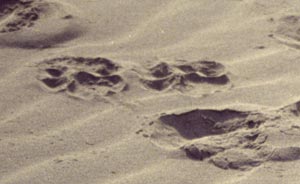
In Namibia, in the late 1980s I was told by a reliable source that there were a small number of lions who occasionally ended up on the Skeleton Coast, having wandered there in bad times from the desert hinterland in search of seals and whales to scavenge. This I needed to see for myself and so my wife and I spent several months in the area north of the Uniab. Eventually we saw lion tracks on the beach near a wooden fishing boat wreck, and then again much further north on the Kunene river, and had a far-off, fleeting sighting of a lioness at the Uniab river mouth as well. The lion tracks we had seen had been tantalizingly fresh only to be washed away at the next high tide, leaving me quite frustrated at how close I had come on at least two occasions. In 1989 I did see these same coastal lions, when they moved inland for a while, at a small spring frequented by black rhino, and desert elephant in the high desert to the West of the Palamwag concession. They were a gaunt-looking lot and the males had ragged, wispy manes. They were however in magnificent condition and ultimate examples of animals that had endured and survived!
.