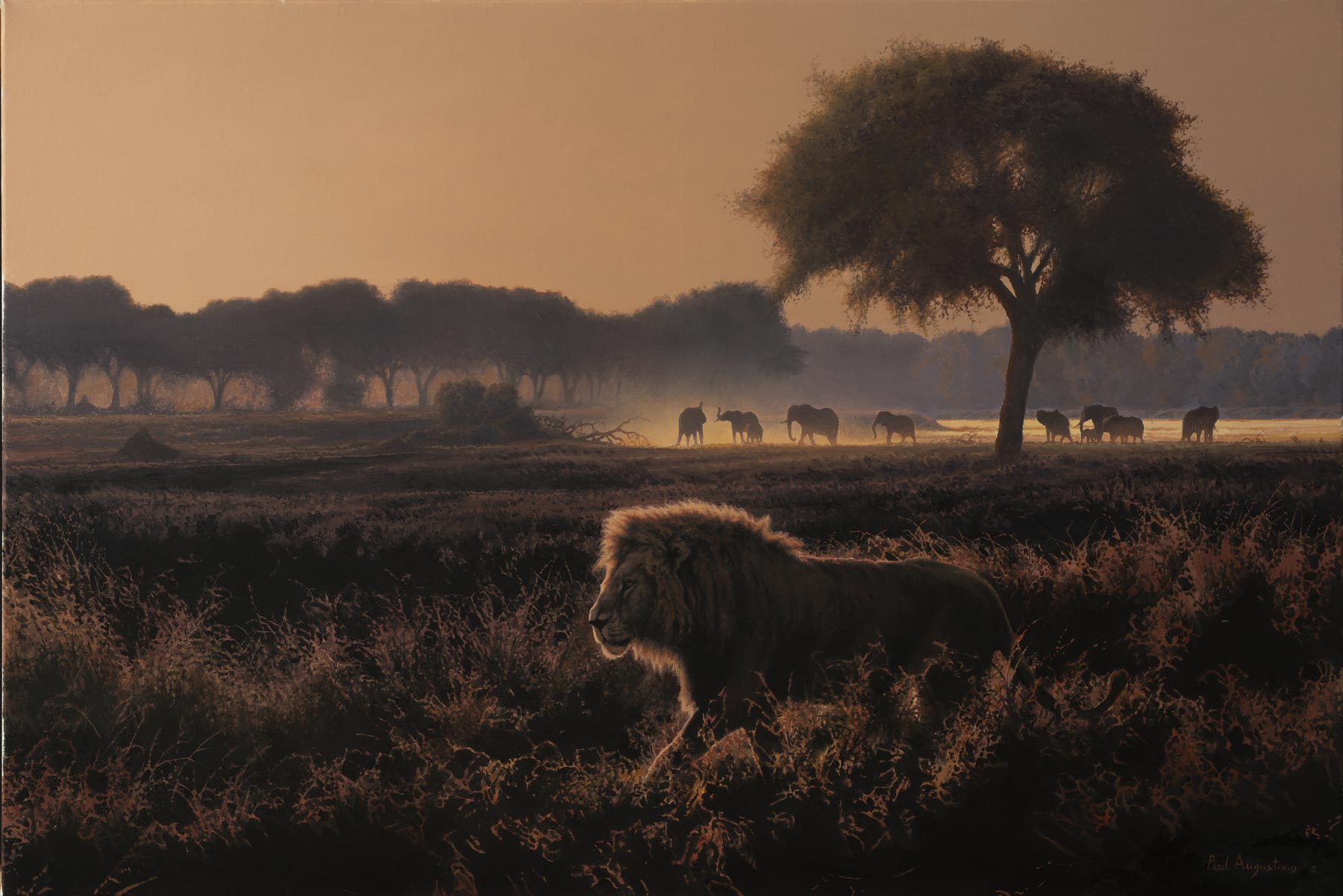
REFUGIA SERIES
ARTIST: Paul Augustinus
TITLE:Evening Shadows in the Zambezi Valley
SIZE: 61 x 91 cm
Oil on Canvas
This is the second in my series of late evening backlit scenes from the Sapi Flood Plain in the Zambezi Valley. In the 1960s and 1970s seeing a lion at Mana Pools or Sapi was virtually impossible. They were very skittish and still being hunted in the neighbouring Urungwe, Nyakasanga, and Kariba controlled hunting areas. However they were very vocal at night and would like to approach quite close to ones camp. For a few minutes, bathed in our torch light beams, their eyes sparkled back at us like diamonds, flickering curiously as they passed in the night. If one was very lucky one might catch them out on the floodplains just before sunrise as they made their way back to the mopane forests of the hinterland. That's my mental image of Zambezi Valley lions - stealthy glimpses of them in the long grasses and with herds of elephants in the background and the Zambezi glinting far off in the distance. This paintings's inspiration came from one of these beautiful moments - just before the sun had risen over the horizon, after which heat burned down with a physical weight, the scenery hardened into grey blue blurs, and tsetse flies had woken from their slumbers. When that happens all that is left to do for the rest of the day is to sit under a tree and fish for something to eat for lunch.
.